Why customer engagement in energy depends on orchestration, not access
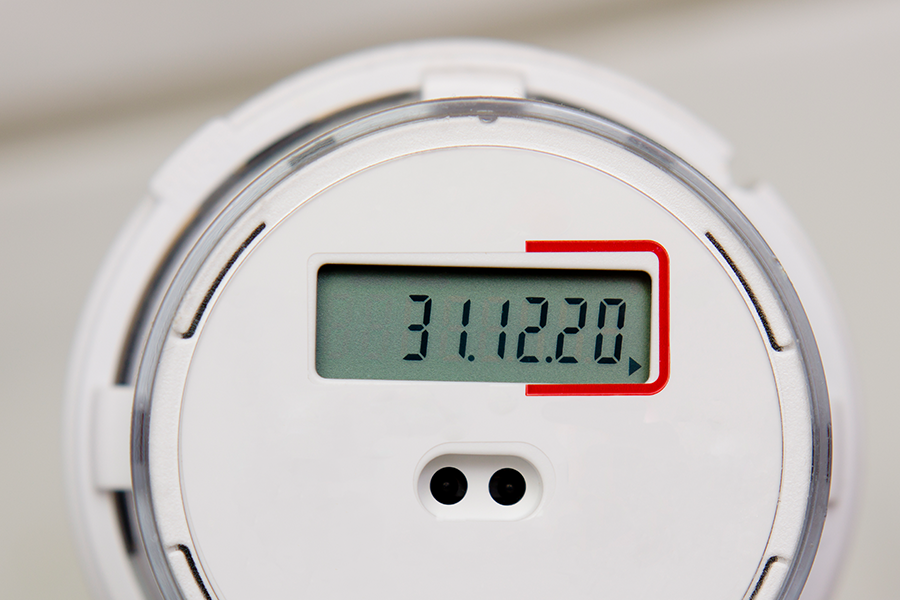
Every energy meter tells a story – revealing consumption patterns, asset behaviour, price sensitivity and flexibility potential. With the rollout of smart meters, half-hourly settlement, and the rapid electrification of transport and heating, UK energy suppliers today have access to more customer data than at any point in their history.
But there is a growing gap between data availability and operational use.
What matters now is whether energy suppliers can reliably connect that data, trust it, and act on it in real-time across fragmented systems. In many utilities, the issue is no longer a lack of insight, but the fact that it rarely makes it into production decisions.
A data-rich market that is not yet insight-led
The energy market has become fundamentally data-rich. Smart meters generate granular consumption data at scale. Settlement processes are becoming more frequent and accurate. At the same time, customers are adopting EVs, solar panels, and home batteries, each creating additional behavioural and flexibility signals.
In theory, this should enable a step change in customer engagement.
In reality, customers continue to receive generic or broadly segmented communications. Tariffs remain largely standardised rather than behaviour-based, and engagement is still reactive – triggered by billing cycles, complaints, or manual campaigns rather than live customer signals.
Data without orchestration creates operational noise
Customer, meter, asset, and pricing data often sit across CIS, CRM, billing, and analytics environments that were never designed to operate together in real-time. Without a unifying layer to connect these signals and trigger action, suppliers revert to siloed interpretation and batch-driven processes.
This leads to operational noise rather than clarity:
- inconsistent timing of communications,
- missed opportunities to act on real-time behaviour,
- and limited ability to scale personalisation.
From the customer perspective, this translates into irrelevant messaging, missed savings opportunities, and little sense that their supplier understands how they actually use energy.
From billing customers to engaging households
The traditional energy relationship has been defined by the bill: consumption is measured, charges are calculated, and communication follows. That model made sense in a stable, linear system. It does not reflect today’s reality.
As households adopt EVs, solar, and heat pumps, they become active participants in the energy system – capable of shifting demand, exporting energy, and responding to price signals.
As a result, expectations are changing. Customers no longer just want to know what they used. They expect guidance on when and how to use energy more effectively. This requires a shift from periodic billing to continuous, event-driven engagement.
What leading suppliers are doing differently
The suppliers moving ahead are not those with the most data – but those best able to turn it into action. They typically combine three capabilities:
The result is a fundamentally different customer experience – one that feels useful rather than transactional. It also creates measurable business value through greater participation in flexibility programmes, increased uptake of relevant tariffs, and lower cost-to-serve.
The hidden driver: integration
None of these capabilities are new in isolation. The challenge lies in making them work together at scale.
Predictive insight, personalisation, and proactive engagement all depend on a shared operational foundation: consistent data models, near real-time data access, and tight integration between CIS, CRM, billing, and analytics.
This is where most personalisation efforts stall – not because the idea is wrong, but because systems are not connected in a way that allows insight to flow into action.
The challenge is rarely generating insight. It is operationalising that insight consistently across customer journeys and channels.
The next step in the customer relationship
The energy market is shifting from a model defined by measurement to one defined by interaction. As electrification accelerates and flexibility gains value, suppliers are moving from billing customers after the fact to actively guiding behaviour in real-time.
What was once primarily a customer engagement challenge is increasingly becoming a commercial and operational one.
The suppliers that lead in this environment will not be those with more data, but those who can consistently turn that data into action – at the right moment and at scale.
In practice, orchestration means connecting customer and operational data, applying consistent decisioning, and triggering timely engagement across channels.
In a data-rich market, the real advantage lies not in information, but in the ability to use it.